
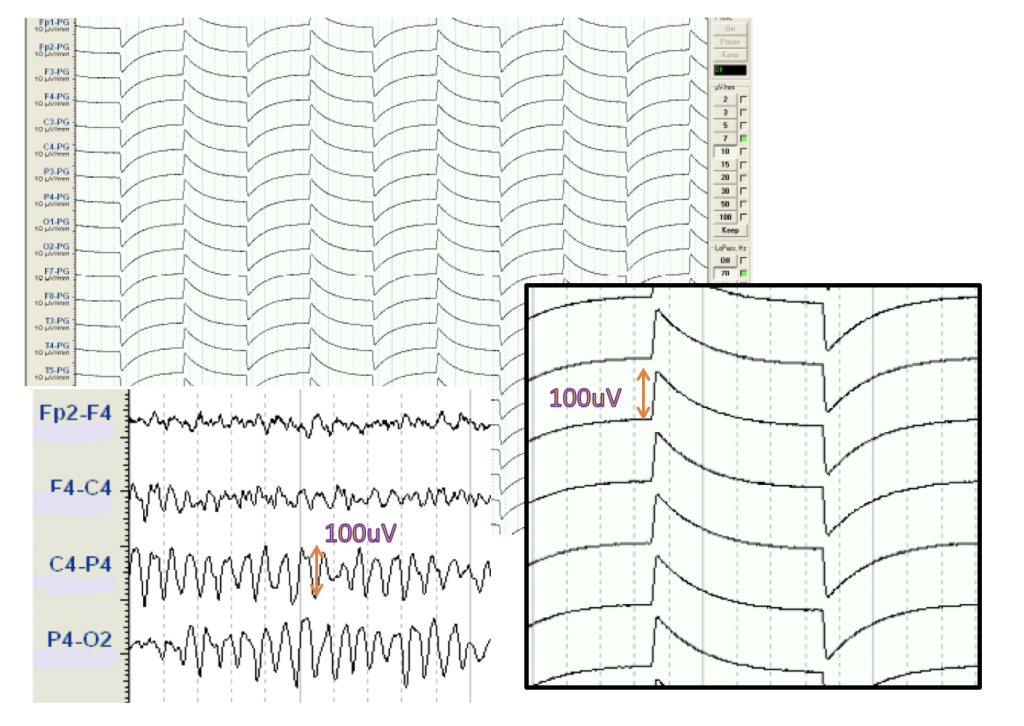
Sensitivity: Providing you know the value of the input calibration you can measure the sensitivity of the display system and appreciate the size of the EEG signals presented in the recording.
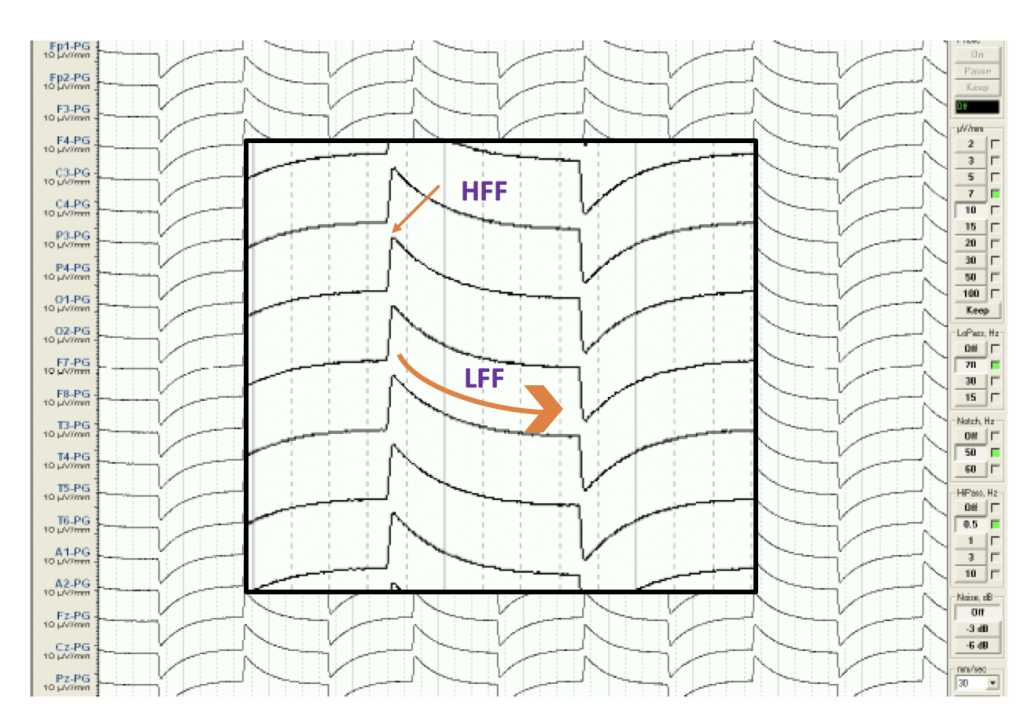
Filters: The filter settings tell us the bandwidth of signals we are recording to at least 70% of their true amplitude. We can make a quick analysis of the filter settings from the calibration signal by looking at the peaks of the wave forms for the high frequency filter and at the decay of the waveform for the low frequency filter. At a glance it is important to note that all channels react the same with an appropriate sharpness and fall of the calibration waveform.
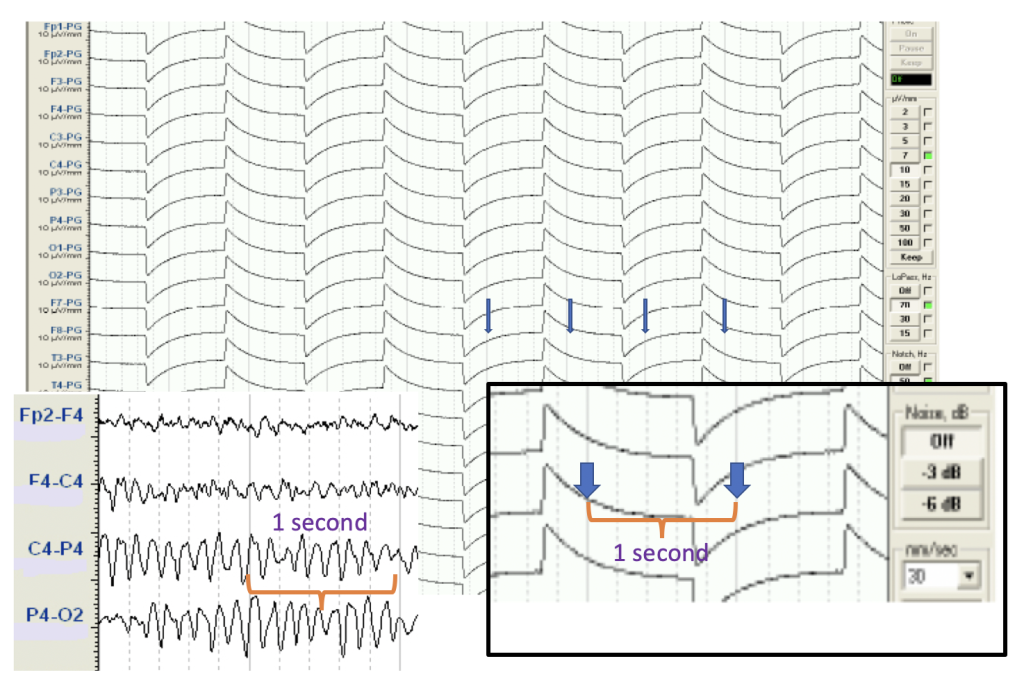
Display speed: While not directly related to the calibration signal it is also important to take note of the display speed. This is essential for measuring frequencies. The one second markers are depicted by darker horizontal lines on the display. Frequency is the number of cycles counted in a one second period.
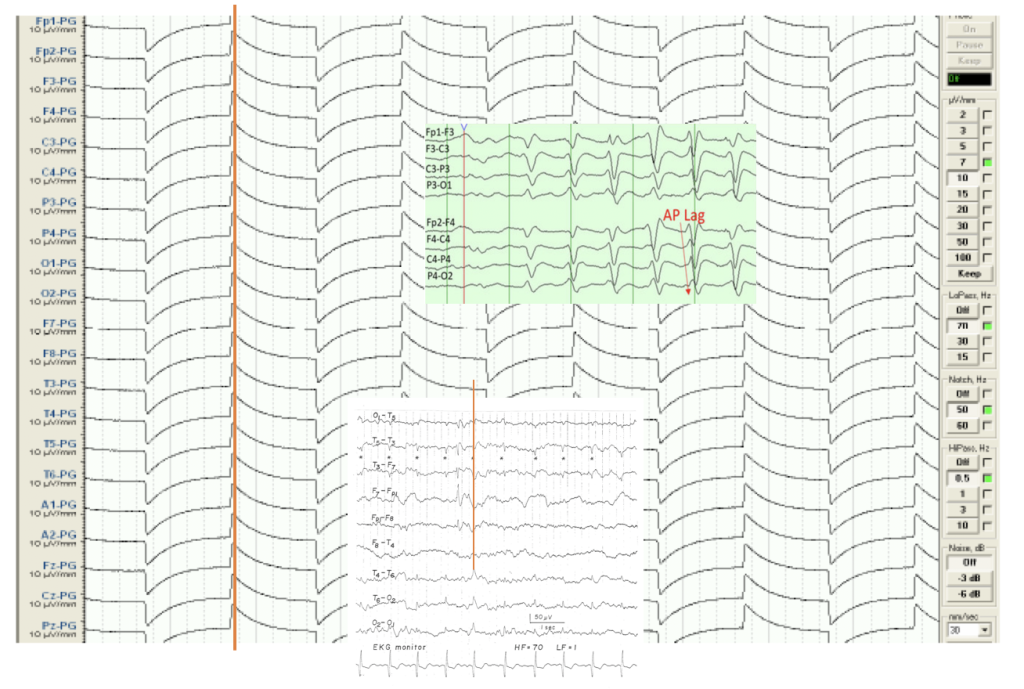
Alignment: It is important to be sure that the calibration signal is aligned on each channel when looking at time related events. Identifying a phase reversal, particularly sharp waves or spike wave discharges, can only be done if the channels are in alignment. Recognition of phase shifts, such as anterior to posterior lag with periodic discharges (LPDs or GPDs) can only be made when the channels are correctly aligned.
Centring
Centring of the EEG channels relates to their horizontal positioning on the display. Each channel should begin at the zero point to ensure true representation of positive and negative phases of the signal. This ensures the presenting waveforms are displayed within the dynamic range of the display.
On the digital apparatus centring is set by the software and should adjust automatically if there is a significant shift to the input.
Channels are considered centred when they are equidistant on the display and can be observed when the calibration signal is displayed.
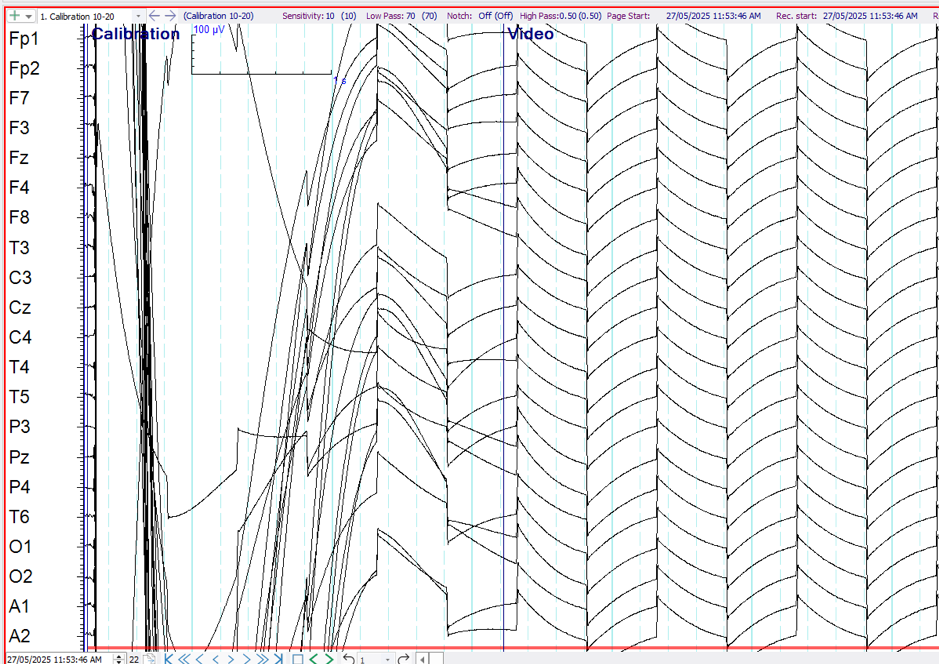
This example shows the EEG machine’s electrical centering adjustment occurring as the recording begins.
