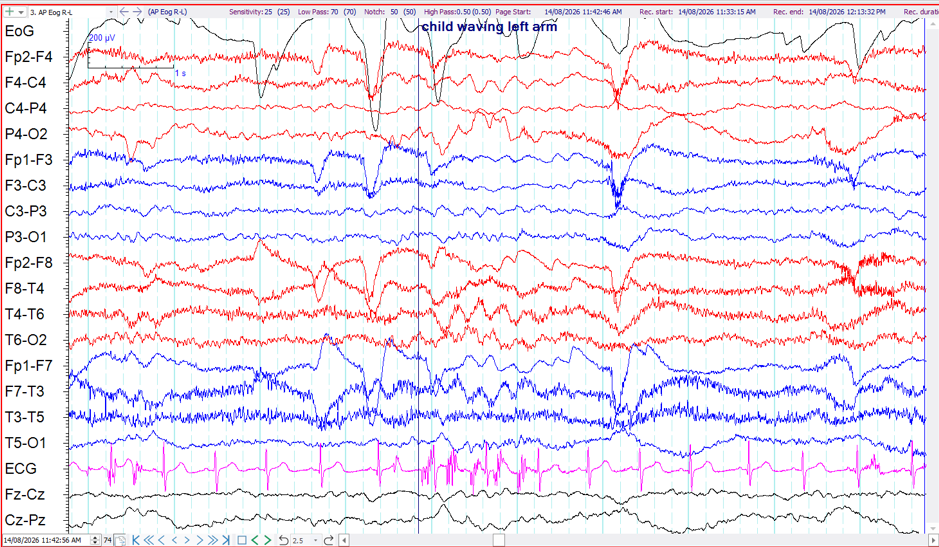
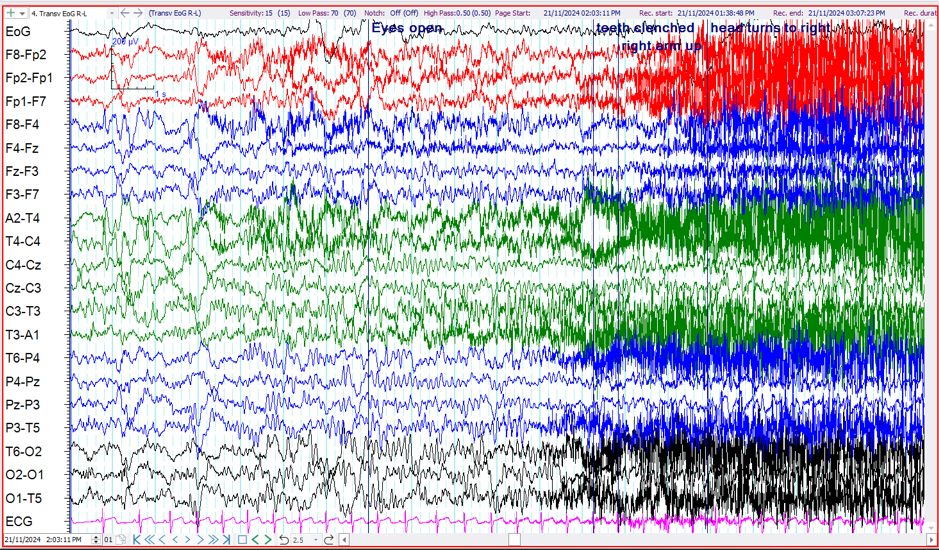
Lastly in this topic, the importance of observing the patient will be discussed. By watching the patient carefully and reporting clinical changes and movements the reporting physician can have the best possible information to aid diagnosis when reading the EEG. It is also important to be able to continue to keep your patient relaxed by being aware of their clinical state throughout the recording.
Annotation
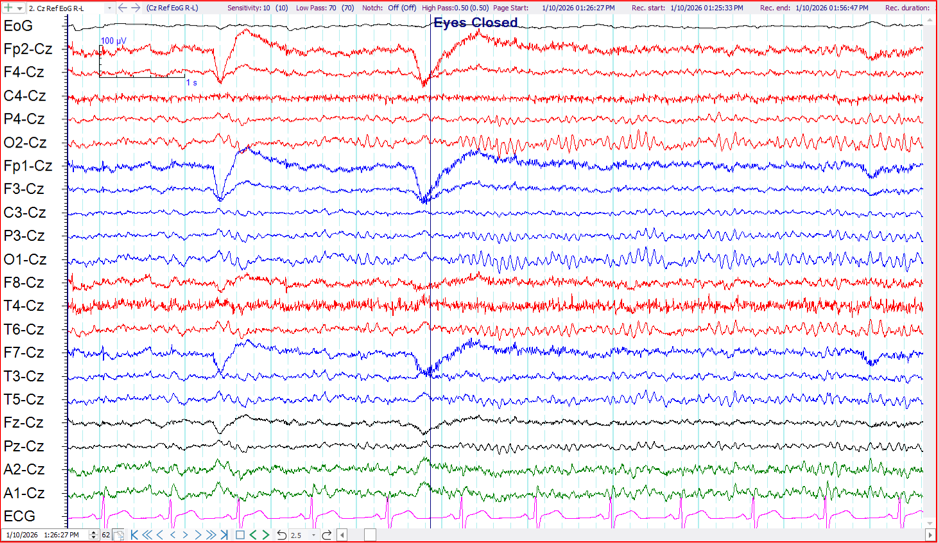
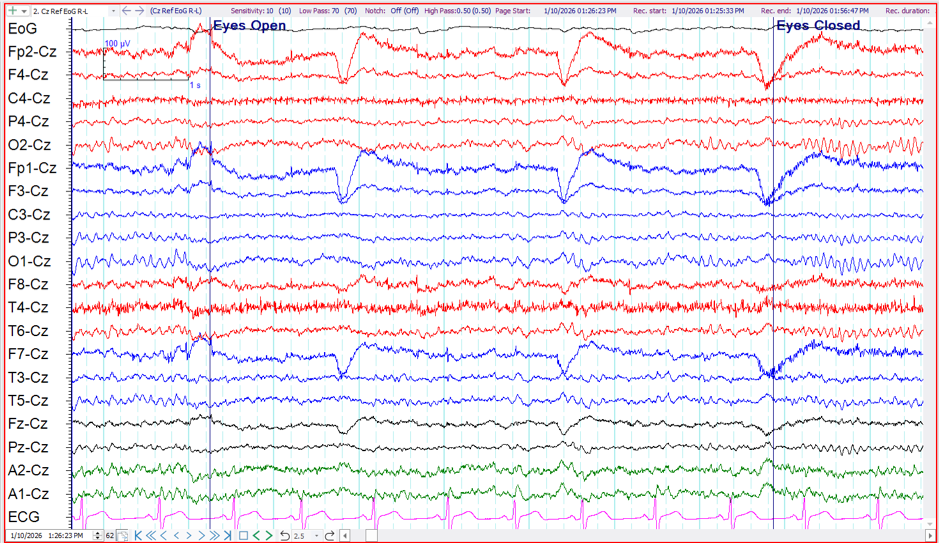
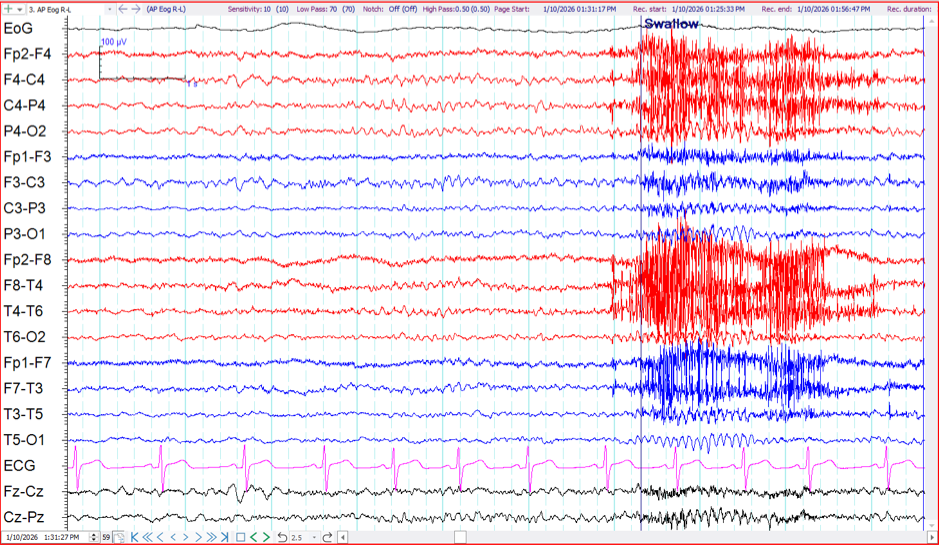
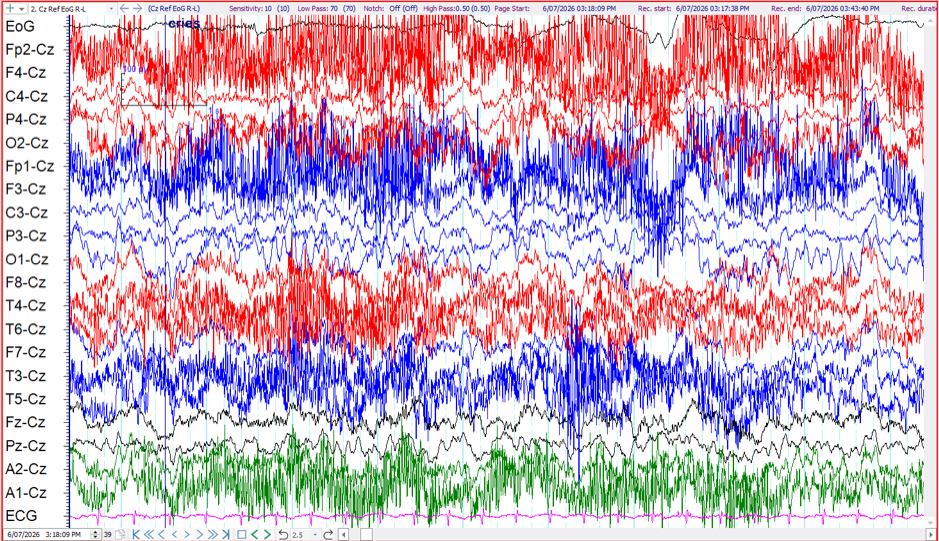
Annotating the EEG, or providing notes on the EEG during the recording, is probably the most important part of the EEG. The reporting physician is usually not present while recording the EEG so rely heavily on the technologist/scientist to provide accurate information to assist with the interpretation of the recording. Annotations include the machine settings (often inserted automatically with any change to the recording settings), details of the patient’s clinical state and movements as well as artefact identification and elimination.
The most common clinical annotations include
Eyes opened
Eyes closed
Swallow
Eye movement
Head movement
Crying
More specific clinical annotations are used when describing a clinical event
Jerk
Head turn
Eyes deviate to the right
Lip smacking
Unresponsive